Why Podcasters Hate the Upload Step
When I was managing podcast strategy for several creators, the technical bottleneck was infuriating. A standard 2-hour video podcast recording in 4K is often upwards of 15GB. If you use a cloud-based AI tool, your workflow looks like this:
- Wait 45 to 60 minutes for the massive file to upload.
- Hope your internet connection doesn't drop midway.
- Wait another 15 minutes for their servers to process the audio.
- Pay an expensive subscription fee because cloud servers charge for compute bandwidth.
It made no sense. Your Mac has an incredibly powerful Neural Engine sitting idle, yet you are paying a monthly fee to rent server space in an Amazon data center. That is why I built Reelify AI as an offline podcast clipper mac application.
How Offline Podcast Clipping Works on Mac
If you search for an "ai podcast clipper offline," you will notice a bizarre trend: very few products actually exist. Nearly all tools marketed for podcasters are web wrappers that send your data to the cloud.
Reelify AI is structurally different. Because it is a compiled, native macOS application, it leverages Apple's Core ML framework. When you drag a 2-hour podcast into the app, it reads the file directly from your SSD. It does not compress it. It does not send it over the network.
Instead, the local processing engine analyzes the audio wave, transcribes the speech, and detects semantic meaning directly on your local hardware. You can literally turn off your WiFi, open the app, and it will still generate perfectly edited, captioned clips from your long-form interview. If your workflow is more interview-driven than podcast-driven, see the interview clip generator for Mac page.
What makes this different: the podcast workflow stays local from import to clip review, which is why long episodes, client interviews, and unreleased conversations are easier to handle without an upload queue in the middle.
What the Offline Algorithm Finds in Your Audio
Speed is irrelevant if the clip selection is poor. To rival heavy cloud tools like Opus Clip, the local offline models had to be sophisticated. The AI does not just look for volume spikes; it analyzes the context of the conversation.
- Hook Detection: It scans the transcript for strong declarative statements or controversial questions that make good opening hooks.
- Topic Boundaries: It understands when guests stop talking about "nutrition" and transition into "sleep habits," ensuring the clip tells a complete micro-story.
- Quotable Moments: It identifies high semantic density—sentences where a large amount of value or emotion is packed into a narrow window.
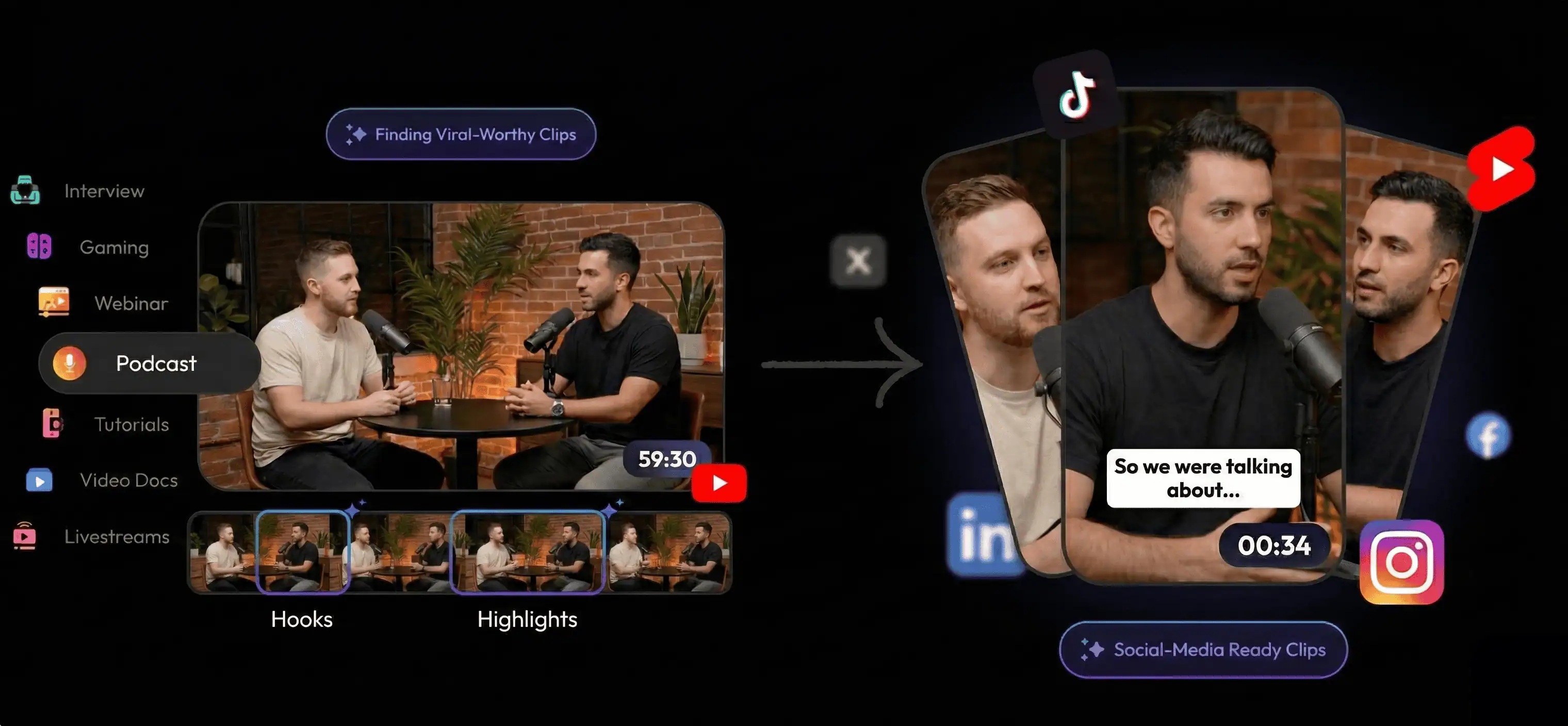
Performance Benchmarks on Mac
If you are switching to a local tool, you need to know it will not choke on your timeline. Because Reelify AI is compiled for Apple Silicon, the speed is exceptional compared to browser-based rendering.
| Podcast File Size | Typical Cloud Upload Time | Reelify Local Analysis Time | Time Saved |
|---|---|---|---|
| 1GB (Approx. 15 mins) | 10 minutes | ~20 seconds | 9.5 minutes |
| 5GB (Approx. 60 mins) | 35 minutes | ~60 seconds | 34 minutes |
| 15GB (Approx 120+ mins) | 80+ minutes | ~2.5 minutes | 77+ minutes |
The Privacy Argument for Unreleased Interviews
Beyond speed, there is a fundamental security issue with cloud editing. If you are an agency cutting an unreleased interview, or you are editing a high-profile guest's podcast under an NDA, uploading their raw footage to a third-party server is a massive risk.
I built this tool with complete privacy in mind. Your files remain on your local drive. We do not use your podcast audio to train a global AI model. It is a much cleaner fit for confidential or embargoed media than a browser-first upload workflow.
Getting Started with the Local Clipper
If you are tired of paying recurring fees just to wait on slow upload speeds, downloading the local offline tool is straightforward:
- Download the app from the Mac App Store (ensuring it passes Apple's strict security notarization).
- Use the free tier to test the workflow on a local file, ensuring it detects accurate moments for your niche.
- Let the AI run the batch processing, picking out the best 10 to 15 segments.
- Export your final clips directly to your local drive for YouTube, or use the TikTok clips format for mobile native sharing.