Short version: Reelify AI suits client work because client footage never leaves your Mac: clips are found, captioned, and exported locally, with no upload to a third-party server. That makes chain of custody easy to explain, and review is faster because you start from AI-suggested clips instead of a full timeline.
I do not think service teams need another generic “best AI clipper” page. If you work on client videos, the real question is simpler: can this tool help you move fast without creating new risk? That means less browser waiting, less ambiguity about where files go, and fewer awkward answers during approvals.
This page is about the day-to-day mechanics of client delivery: review speed, source handling, revision rounds, and having a workflow you can explain clearly. If your workflow is legal review or deposition clips, see AI video clipper for lawyers.
Why Client Work Changes the Tool Choice
If you are clipping your own podcast, a cloud workflow is mostly an annoyance. If you are clipping client footage, it becomes an operational problem. The stakes are different.
Review speed matters
Clients do not care that a server queue was busy. They care that the draft was late.
Source handling matters
Many teams need a straightforward answer to “where did our footage go?”
Revision rounds matter
The best workflow is the one that lets you reopen a project, adjust clips quickly, and send the next round without friction.
For freelancers, this shows up as awkward client emails. For agencies, it shows up as legal review or internal process checks. For in-house teams serving stakeholders, it shows up as pressure to move quickly without improvising the workflow every time.
What a Better Client Clipping Workflow Looks Like
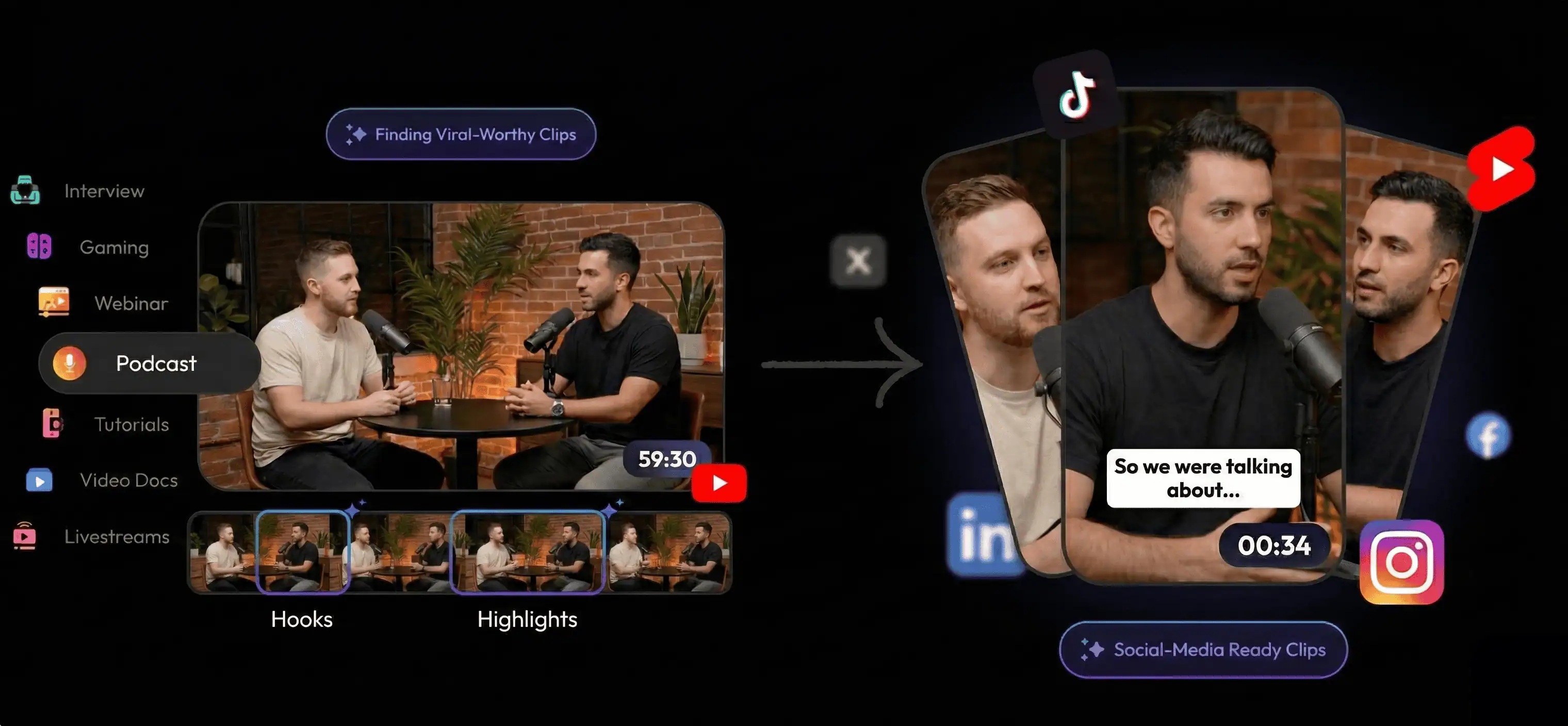
With Reelify, the source file stays on your Mac. You drop in the long-form video, review suggested clips locally, trim where needed, export review-ready versions, and send only the outputs you want to share. That sounds simple, but it removes the two most irritating parts of cloud clippers: upload delay and uncertainty around source footage handling.
- Import the client file locally. No browser upload, no waiting for a transfer to finish.
- Review suggested clips on your machine. You can reject weak suggestions and tighten timestamps before anyone else sees them.
- Export a clean review batch. Send clips for approval instead of sending raw source footage through another external tool.
- Handle revision rounds faster. Reopen the project, adjust a few moments, and export the next round without rerunning a full cloud workflow.
Best Fit
Freelance editors
If you are a solo editor, your tooling choices become part of your trust signal. Clients may never ask about your stack until the wrong project comes along. Then suddenly they want a clear answer about privacy, turnaround, and whether you can handle revisions quickly.
Boutique agencies and content studios
If you manage multiple client accounts, the value is not just privacy. It is process stability. A local workflow is easier to standardize across recurring projects where the same kinds of source videos keep coming in: podcasts, founder interviews, product demos, webinars, and internal brand content. If you want the more agency-specific angle, see AI video editing for agencies.
In-house marketers serving stakeholders
Internal teams often have the same problem as agencies: multiple reviewers, sensitive footage, and pressure to deliver short-form assets quickly. The difference is that the “client” is a VP, founder, product team, or comms lead instead of an outside account.
Cloud Clipper vs Local Client-Work Workflow
| Workflow step | Cloud clipper | Reelify local workflow |
|---|---|---|
| Bring in source footage | Upload to a browser tool and wait for transfer | Open the file directly on your Mac |
| Initial review | Wait for queue + process before reviewing | Review suggestions locally as soon as analysis completes |
| Client questions about handling | Requires explaining a third-party upload flow | You can honestly say the source stayed on your machine |
| Revision round | Often means another browser roundtrip | Reopen project and export the next batch locally |
| Best fit | Teams comfortable routing source files through SaaS tools | Editors who want faster review and tighter source control |
What You Can Tell Clients Honestly
I think this matters more than most feature lists. Good client communication is specific and boring. It is not “enterprise-grade” language. It is straightforward language.
- The source footage stays on my Mac during clip generation.
- I review clip suggestions locally before I send anything for approval.
- I only share exported clips or review copies, not the raw footage through another clipping service.
- If we need another round, I can reopen the project quickly instead of waiting through another upload flow.
That is not a legal guarantee by itself, and it should not replace your own client process. But it is a much cleaner operational story than “I uploaded your video to a web app and trusted its privacy policy.”
When This Page Is Not the Right Fit
If your main concern is strict privacy language and no-upload positioning, the private video editing no upload page goes deeper on that angle. If your main need is broader Mac-native editing context, visit local AI video editor. If you are specifically comparing agency-focused workflows, the existing agency page is still useful.
FAQ
Is Reelify AI a good fit for client work?
Yes, especially if you already work on Mac and want a clipping workflow that is easier to explain, faster to review, and less dependent on upload queues.
How does local clipping help with approvals?
You can review and polish clips before you send anything out. That usually means the client sees a tighter first round, and your follow-up rounds are easier because the project is already local.
Is this the same as the agency page?
Not quite. The agency page is narrower and more NDA-oriented. This page is broader: it covers solo freelancers, agencies, and in-house teams doing client-style delivery work. If the job is specifically embargoed or contract-sensitive footage, the NDA content page is the stricter version of that problem.
What kind of source videos fit this workflow?
Podcasts, founder interviews, customer interviews, webinars, product demos, executive updates, and other long-form videos where you need to turn raw footage into short clips quickly.
Best next step: if you already handle client footage on Mac, test Reelify with a real project and compare the review flow against your current cloud process. That is usually the fastest way to decide if the workflow fits your business.